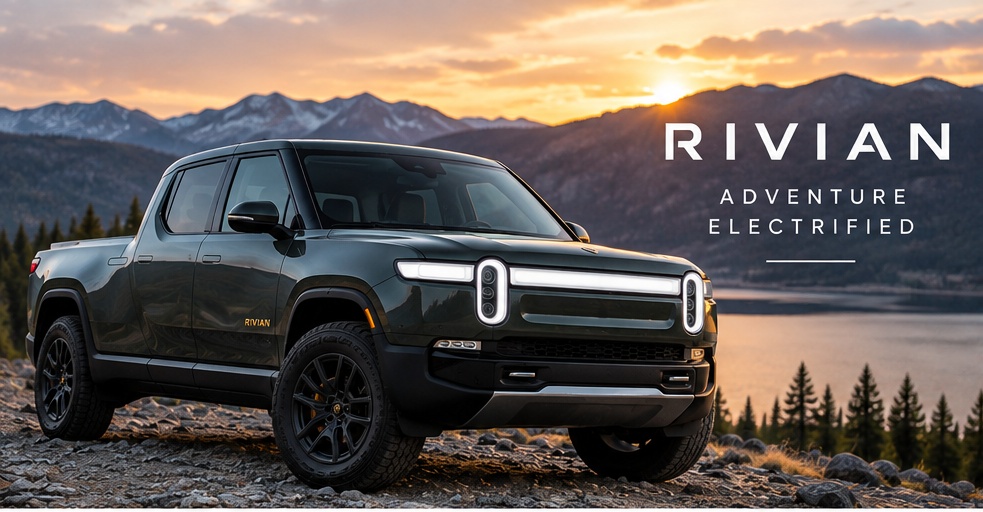
Rivian has always taken a different approach to the EV market. Instead of starting with a conventional sedan and working outward, the company built its identity around adventure.
The result is the R1T pickup and R1S SUV — two electric vehicles that combine serious performance with the kind of utility traditionally associated with large trucks and SUVs.
And that's what makes Rivian interesting.
These aren't simply vehicles designed to make the daily commute quieter. They are designed to make the trip more interesting.
Power That Changes the Experience
Electric motors have an obvious advantage: instant torque.
In the R1 lineup, that translates into brutally quick acceleration when you want it, but the real trick is how Rivian uses electric motors to control each wheel and manage traction.
The R1T and R1S are available in multiple powertrain configurations, including Dual, Tri and Quad-motor versions. The Quad takes the idea even further, using four motors to independently manage torque and traction.
That means the same vehicle that can feel surprisingly quick on pavement can also be configured for serious off-road driving.
Rivian's Quad system is particularly interesting because the motors can adjust torque independently, giving the vehicle precise control when terrain gets difficult.
The R1T: A Different Kind of Pickup
The R1T doesn't look like a traditional pickup — and that's part of the appeal.
Its proportions are distinctive, the front end is unmistakable and the design manages to look premium without becoming overly complicated.
Then there's the practicality.
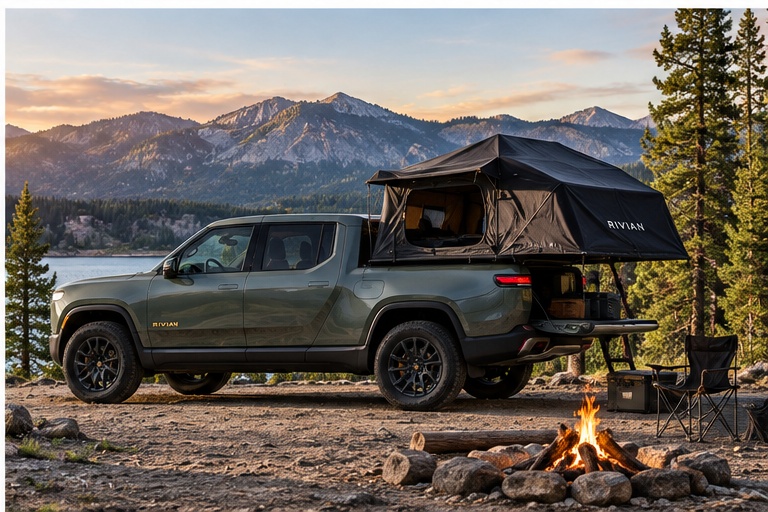
The R1T gives you the open bed of a pickup while adding the advantages of an EV platform, including storage solutions designed around the vehicle's architecture.
It's the kind of truck that can handle a weekday commute, a trip to the hardware store and a weekend heading into the mountains without feeling like three different vehicles.
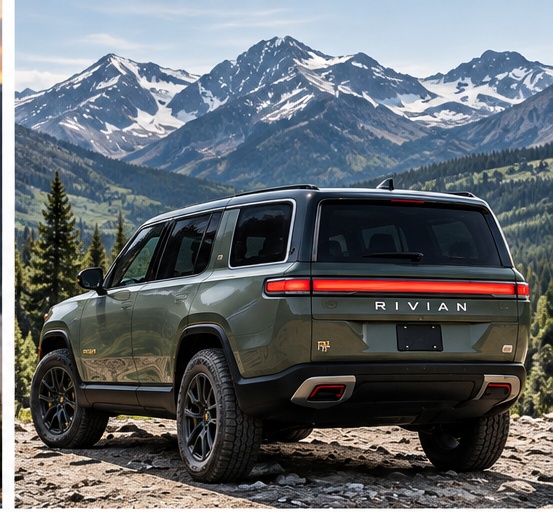
The R1S: The SUV for People Who Actually Go Places
The R1S takes the same basic philosophy and packages it as an SUV.
There's room for passengers, plenty of cargo capacity and the ability to head far beyond the pavement.
But what makes the R1S particularly compelling is that it doesn't drive like a traditional large SUV.
The low center of gravity of an EV, immediate electric torque and sophisticated traction management give it a character that's difficult to duplicate with a conventional drivetrain.
For someone who wants a luxury SUV but doesn't want something that feels fragile once the pavement ends, the R1S makes a strong argument.
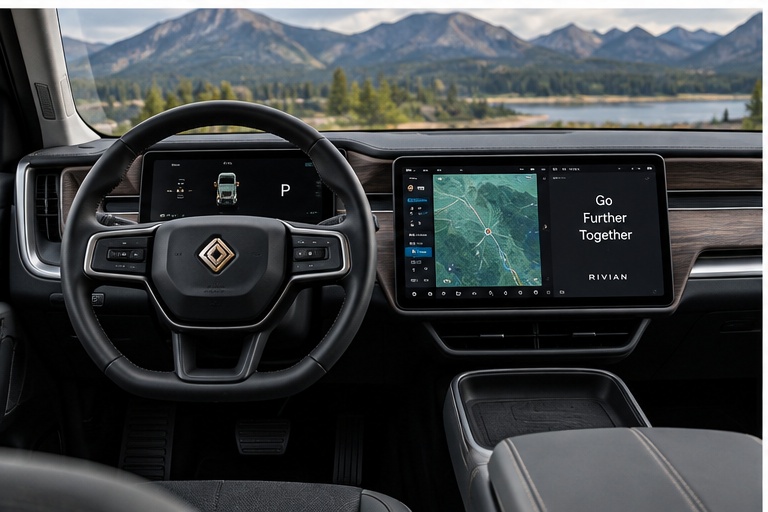
Range Without Giving Up the Adventure
Range has always been one of the biggest questions surrounding electric vehicles.
Rivian has addressed that concern with increasingly large battery options. The company currently lists EPA-estimated ranges of up to 420 miles for the R1T and 410 miles for the R1S, depending on configuration.
Obviously, real-world range will vary.
Tires, weather, speed, temperature, terrain and accessories all matter — particularly when you're driving a large vehicle into the mountains rather than cruising around town.
But the larger point is that modern Rivians have moved well beyond the idea that an EV is only practical for short daily trips.
The Charging Question
Charging infrastructure is becoming just as important as battery size.
Rivian's Adventure Network is designed around that reality. The company has been expanding its network while also opening it to other EVs, and its newer vehicles use the NACS charging standard.
Rivian says 2026-and-newer vehicles have built-in NACS ports and can access more than 21,500 Tesla Superchargers.
That's a significant advantage for someone considering an EV for long-distance travel.
The adventure doesn't end simply because the pavement does.
The Price of Adventure
This is where Rivian becomes a premium proposition.
Current U.S. starting prices listed by Rivian are $79,990 for the R1T and $83,990 for the R1S, before applicable taxes and fees. Higher-performance configurations can climb substantially higher.
That's real money.
But Rivian isn't really competing with inexpensive transportation. It's selling a combination of performance, technology, utility and lifestyle.
The question isn't whether a Rivian is cheap.
It isn't.
The question is whether the combination is worth paying for.
The Verdict
Rivian has managed to create something that many EV manufacturers are still struggling to achieve: an electric vehicle with an identity.
The R1T and R1S don't feel like gasoline vehicles converted to electric power.
They feel like vehicles designed around what electric power can actually do.
They're quick. They're capable. They're technologically advanced. And most importantly, they make the idea of driving electric feel less like a compromise and more like an upgrade.
For buyers who want an EV but aren't interested in giving up performance, utility or adventure, Rivian deserves a serious look.
The future of the truck and SUV may not look like the past. Rivian is betting that it shouldn't.
Interested in Rivian?
We'll add our Rivian shopping and affiliate links here when they're ready.
SHOP RIVIANOfficial source: Rivian