Whistler’s Mother: The Painting That Became an American Icon
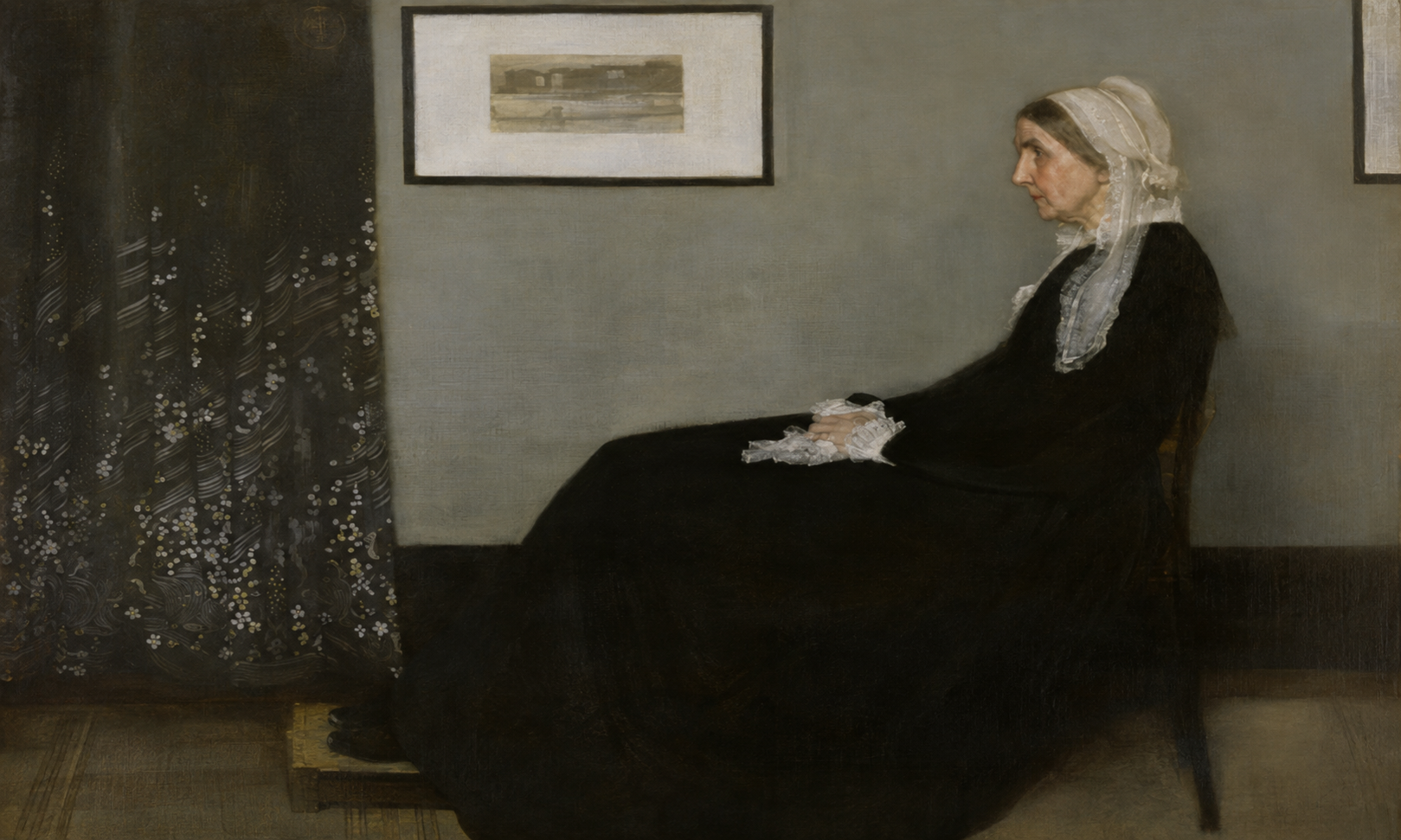
James McNeill Whistler’s famous painting Arrangement in Grey and Black No. 1, better known today as Whistler’s Mother, has become one of the most recognizable portraits in Western art. Painted in 1871, the work shows Whistler’s mother, Anna McNeill Whistler, seated in profile against an almost completely restrained interior. At first glance, there doesn’t seem to be much happening: an elderly woman dressed in black sits quietly against a gray wall, beside a dark curtain, with only a framed picture providing decoration. But that simplicity is exactly what gives the painting its unusual power. Whistler carefully balanced blacks, grays, whites, and muted tones instead of filling the canvas with bright colors or dramatic scenery. Her rigid profile, folded hands, long black dress, and expression create a feeling of stillness that can be interpreted as dignity, patience, age, solitude, or even sadness. Interestingly, Whistler himself emphasized the painting as an artistic “arrangement” of tones and forms, rather than simply presenting it as a sentimental portrait of his mother. Over time, however, the public gave the painting an emotional life of its own. It became associated with motherhood, devotion, family, and old age, demonstrating how a work of art can eventually mean something very different to its audience than what its creator originally intended.
That history is what makes Whistler’s Mother much more interesting than simply looking at the image and moving on. Why did such a quiet painting become internationally famous while thousands of other Victorian portraits disappeared from popular memory? Part of the answer is its extraordinary composition. Nearly everything has been stripped down to basic shapes: the rectangular picture frame, vertical curtain, horizontal floor line, dark triangular mass of the dress, and pale face emerging from the surrounding gray. Whistler transformed an ordinary domestic scene into something approaching visual geometry, while still leaving enough humanity in his mother's face and hands to keep the picture from becoming cold or completely abstract. More than 150 years later, people continue reproducing, parodying, analyzing, and debating the painting because its apparent simplicity hides a much more sophisticated artistic experiment. The Art Vignette video “Why Whistler’s Mother Isn’t Actually About His Mother” explores that history and explains why Whistler resisted the sentimental interpretation that eventually made his painting famous. If you enjoy art history, famous paintings, fine art, artist documentaries, and the hidden stories behind iconic works, the video offers a deeper look at how one restrained portrait became a cultural phenomenon.
WATCH THE FULL VIDEO: Why Whistler’s Mother Isn’t Actually About His Mother — YouTube
MORE ART VIDEOS: Visit Art Vignette on YouTube
Lock In Your Lifetime Subscription
Get full access to Candid Beach Galleries, exclusive content, new releases, and the complete archive with a lifetime subscription.